Small, Yet Achievable Steps Can Help Balance Health

Small, Yet Achievable Steps Can Help Balance Health

From Tansy Rodgers, FNTP (Functional Nutritional Therapy Practitioner), Health and Lifestyle Coach, Personal Trainer, Fitness Instructor, and Physical Therapist Assistant

We all have moments where we make big plans to shake up our lifestyle and work toward improving our health. Lose those extra pounds. Quit smoking. Get to the gym and start exercising. Yet, it can feel daunting and overwhelming when looking at the big picture.

Even though it is important to strive to achieve bigger health goals to improve your overall wellness, there are small steps you can take that will greatly impact the quality of your life. You don’t always have to take a huge leap to reap health benefits. And, as we get older, it is just as important to take many small healthy steps as it is to take the big ones – better balancing out our mental, emotional, physical health, etc.

The best part about taking small steps in your health journey is that it’s easier to stick to them. Even if you only have a few minutes in your day, you can take that time to improve your well-being.

Here are 5 small healthy steps you can take today to start balancing out the many arenas of your health.

Sleeping mask Alarm clock and milk
  1. Get to bed earlier. Not getting enough sleep can cause mood swings, weight gain, food cravings, inflammation, and overall body aches. Over time, a shortage of sleep can raise your risk of heart attack or stroke – regardless of your age, weight, or exercise habits. Aim for 7-9 hours of sleep a night and try going to bed even 15 minutes earlier, more if you are sleep-deprived.
  • Check your posture and ergonomics. Poor posture and ergonomics can cause a slew of health concerns, such as low back, neck, and shoulder pain. A slouched posture also decreases your energy and causes disturbances in your digestion. Next time you are at your desk or on your phone, take a moment to straighten your back, tuck in your  stomach, and put your feet flat on the floor. You should notice a relaxed feeling right away and it helps to avoid back pain. And if you work at a computer, look at the ergonomics of your workstation — how you fit and move in your environment — to help prevent back and neck strain, carpal tunnel syndrome, eye strain, and other occupational injuries.
  • Make a few small dietary changes. Try swapping out white rice for brown rice. Replace one sugary drink (soda, juice, etc.) for a tall glass of water with some fresh fruit slices. Eat almonds or cashews or carrots dipped in hummus rather than reaching for candy or chips. It’s no secret that vegetables, especially dark leafy greens, are good for you, but there are added benefits…they are rich in fiber and contain a lot of water, so you will feel full and more satisfied. Cooking dinner for your family? Make cauliflower mashed potatoes instead of regular potatoes, add peas and extra frozen vegetables to soups, and add slices of red or yellow peppers to your sandwiches.
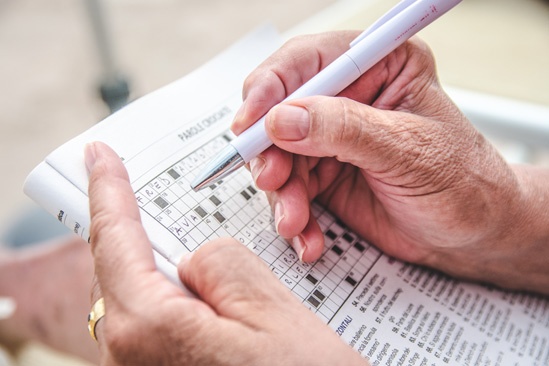
View of an old person completing a crossword puzzle.
  • Do a crossword puzzle. Mentally challenging activities may have a protective effect on your brain. According to research studies, regularly engaging your mind may help lower your risk for the dementia associated with Alzheimer’s disease. Try reading, doing crossword puzzles, playing chess, doing Sodoku. You can also change your routine and make your brain become more engaged. Try walking a new route, eating with your nondominant hand, and staying socially connected with others.
  • Get moving daily. Moving the body is super important, but you don’t have to have a strict gym routine in place to reap the benefits. The next time you have a choice between the stairs and the elevator, pick the stairs. Not only does this keep your body strong so you can keep doing stairs, but it also gets your blood pumping and it exercises your lungs. It conditions your heart and your muscles. But, don’t stop there! Regularly stretching and doing activities to calm your nervous system is important to lower your stress and to avoid injuries – it also helps you stay limber and moving freely as you age. Take a few minutes to stretch out before and after you exercise, stretch right before bed to relieve tension and help you sleep, do tai chi or yoga to increase balance and decrease stress. On the go? Look for natural opportunities in your daily routine to stretch, such as finding a bench to sit and stretch on or reaching for items on a high shelf at the store.

Small steps can lead to a healthy life. When you are younger, they can build the foundation for a lifetime of good health and when you are older, they can help you control diseases you have or lower your risk of getting others in the future!

Interested in learning more about wellness from Tansy? Visit her website at www.tansyrodgers.com.
Fall Prevention Tips

Fall Prevention Tips

By Flagship Rehabilitation

In support of Falls Prevention Awareness Week, September 21-25, 2020, our partners at Flagship Rehabilitation offer the following article on how to prevent falls.

There are many steps you can take to reduce the risk of falls. Here are some tips to follow as general guidelines. It is important for you to discuss any specific concerns you have with your doctor or other health care provider.

Stay Healthy

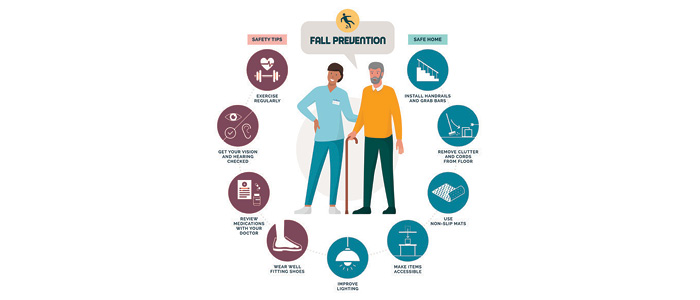
  • Review your medications with your doctor and/or pharmacist on a regular basis. Always bring a list of all the medications you are taking whether prescription, over the counter, vitamins, or herbal supplements to every doctor’s appointment.
  • Have your eyes checked at least once a year or if you notice a change in your vision.
  • Speak to your doctor if you are experiencing dizziness or unsteadiness.
  • Make sure you are getting enough to eat and drink every day.


Exercise Regularly

  • Exercise will increase your strength and flexibility. It will also improve your balance and coordination.
  • Talk to your physician or other healthcare provider before you start an exercise program.


Check the Lighting in Your Home

  • Use good lighting throughout your home. Frosted bulbs or lamp shades will help to reduce glare.
  • Use night lights to avoid sudden changes in light. This will help if you need to get up during the night.

Keep Your Home Orderly

  • Eliminate clutter and things you can trip over from areas where you walk.
  • Arrange countertops, closets, cupboards and other storage areas so regularly used items are easily accessible.  
  • Eliminate throw rugs or make sure they are secured with double-sided tape.


Use Equipment Designed to Keep You Safe

  • Have grab bars installed in your tub or shower and next to your toilet.
  • Use non-slip mats in the tub or shower.
  • Use a tub seat if needed. Dry off before stepping out of the tub or shower.
  • If you need a device to assist with walking, make sure it is in good repair and you are using it correctly and consistently.
  • Install handrails on all steps or staircases.


General Reminders

  • Get up slowly after sitting or lying down.
  • Know your capabilities and limitations.
  • Wear shoes with good support and non-slip soles.
  • Keep a portable phone and important phone numbers close by.
  • Plan ahead – know what to do if you fall.

David Swartley COVID Update #25

From: David Swartley, President/CEO 
Date: September 23, 2020 
RE: Coronavirus (COVID-19) Update #25 

As I’ve discussed in my earlier updates, Moravian Manor Communities (MMC) has been rigorously following all infection control protocols stipulated by the PA Department of Health and the U.S. Centers for Disease Control (CDC) for dealing with the new Coronavirus. But despite our best efforts, recent testing confirmed on September 22 that two residents and one staff member have tested positive for COVID-19, the disease caused by this Coronavirus. The two residents live in our Herrnhut Personal Care neighborhood.

There is no reason for panic – while our staff and fellow residents have worked tirelessly to prevent this highly contagious virus from entering our Community, we have also been preparing for this possibility. Both the residents and staff member participated in our weekly testing as required by the Pennsylvania Department of Health. Both residents are currently asymptomatic (no symptoms) and feel fine. Our employee who tested positive, works in the clinical area and is also asymptomatic. We have been in contact with the Pennsylvania Department of Human Services (DHS) and are taking every step possible to limit future exposure. We are thoroughly investigating the source of the exposure and have reached out to every known person with whom the affected individuals have had contact within our Community.

Since the first knowledge of COVID-19, MMC has taken proactive measures to protect residents and staff. We have been adhering to the recommended control measures and guidelines of DOH, CDC, and Centers for Medicaid & Medicare Services. At this time, we will need to restrict visitation to the Founders Campus (main building) and will continue to screen staff and other essential personnel for any signs of exposure before each shift. We will also continue to limit the contact of necessary care personnel to specialized areas within the facility and continue our heightened hygiene practices.

We are taking this matter seriously, and we understand how difficult this news is for residents and their family members. The safety of our residents, their family members, team members, and our Community remain paramount.

Our Medical Director keeps us apprised of the latest recommendations from the CDC and the PA Department of Health. For those of you seeking additional information, continuous updates are available at the following websites:

Blue Campus Lights & Special Gift Cards Show Support of Local Police

Blue Campus Lights & Special Gift Cards Show Support of Local Police

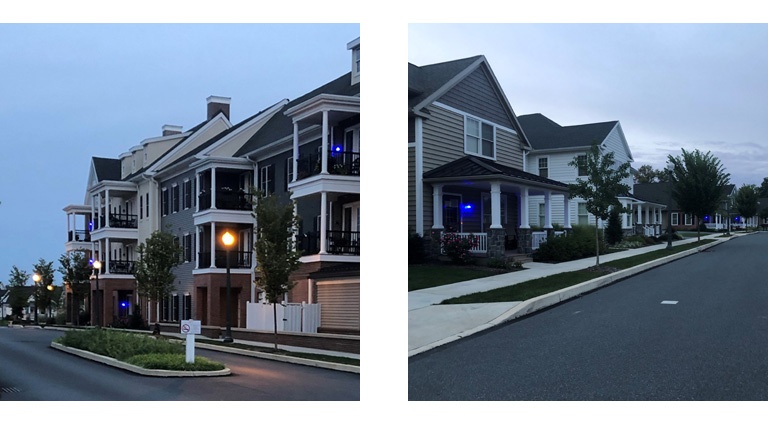
During September, residents of Moravian Manor Communities (MMC) are lighting up their porches with blue lights to show their support for the Lititz Borough Police department. On top of this, a Warwick Woodlands campus resident donated 17 $30 gift cards to Isaac’s Restaurant as a special thank-you to the officers for all their hard work and dedication to Lititz. They are so appreciative of all the support the Lititz Police department gives to our community. And thankful to see the police patrolling their neighborhoods. They said it makes them feel so safe during these times of uncertainty.

To celebrate National Night Out on October 6, MMC has invited the Lititz Borough Police to join residents on the Warwick Woodlands campus to hang out and enjoy free walking tacos and chili. Plus, each officer will receive a free boxed meal to take home…just another way we can show our support to our local heroes!

Thank you Chief Kerry Nye and the entire police department who make living in America’s Cool Smallest town so wonderful.

Lifelong Learning: It Does a Senior Mind & Body Good

Lifelong Learning: It Does a Senior Mind & Body Good

The recent trend of seniors engaging in lifelong learning, through college courses and other endeavors, continues to grow. Embracing their love of learning not only supports a healthy brain, but a healthy body as well.

Healthier brains

Learning something new, such as a new skill or hobby, can help boost your memory. Neuroscientists at the University of Texas at Dallas conducted a study that found seniors who took on a new mentally challenging hobby saw a lasting increase in their memory skills. These researchers believe that taking on a new challenging activity—like learning to quilt, playing an instrument, or operating a computer, for example—strengthens numerous networks within the brain.

Another research study conducted by neurologists at Case Western Reserve University in Cleveland found that engaging in a lifelong pursuit of mentally challenging activities may actually help prevent Alzheimer’s disease. The study found that seniors who frequently read, played mentally challenging games like chess, or engaged in other intellectually stimulating activities are 2.5 times less likely to have Alzheimer’s, which impacts more than 5 million Americans today.

And another study out of Massachusetts General Hospital and Harvard Medical School had similar findings. Using participant interviews and brain scans, those researchers found that seniors who reported higher levels of intellectual stimulation throughout their lifetimes had a marked delay in the onset of memory problems or other Alzheimer’s-type symptoms, even though these study participants didn’t actually have any lower incidence of protein plaques on their brains. The ability to delay or even prevent the potentially debilitating symptoms of Alzheimer’s offers substantial advantages when it comes to seniors’ quality of life.

Healthier bodies

Pursuing lifelong learning activities has benefits that go beyond boosting your brain power. Cognitive neuropsychologists at the University of Sussex in England conducted a study, finding that reading for even just six minutes lowered study participants’ stress levels, slowing their heart rates and easing tension in their muscles. And lower stress has wide ranging benefits for seniors’ cardiovascular health, decreasing blood pressure and reducing the risk of a stroke or heart attack, boosting immunity, and lowering levels of depression.

Researchers at Harvard and Princeton had even more impressive findings in their research on the connection between lifelong learning and health. The study authors found that one more year of education increased life expectancy by 0.18 years. They discovered that the more educated a person, the lower their rates of anxiety and depression as well as the most common acute and chronic diseases (heart disease, stroke, hypertension, high cholesterol, emphysema, diabetes, asthma, ulcer), and they were far less likely to report that they were in overall poor health.

Now, there is a “chicken or egg” debate on whether the increased level of education caused these positive health results, or if the people who were healthier (perhaps based on lifestyle factors like drinking, smoking, eating habits, etc., or the impact of their economic standing) were simply more likely to pursue educational opportunities, but the findings are still significant.

Put on your thinking cap

There are numerous lifelong learning opportunities available to seniors. If you live in a town with a university or community college, call them or visit their website to find out what types of continuing education classes are offered; some colleges will even allow older adults to “audit” a college class—sit-in on classes for no credit, but also for little to no cost. If you don’t live near a school, there are also numerous online learning programs offered by colleges across the country.

AARP compiled a list of free or inexpensive college courses for older adults in all 50 states.

If you’re looking to take up a new intellectually stimulating hobby like quilting or painting, contact your local arts and crafts store to see if they offer classes. To learn how to play an instrument, contact a nearby high school to see if the band director can offer recommendations on teachers, or you can even do an internet search to find teachers in your area. Your local library is another great resource, providing not only a treasure trove of mentally stimulating books, but also offering programs and presentations for eager learners.

Lifelong learning at Moravian Manor Communities (MMC)

One of the many advantages of living in a Life Plan Community such as MMC, is the array of activities and events offered to residents through the community life program.

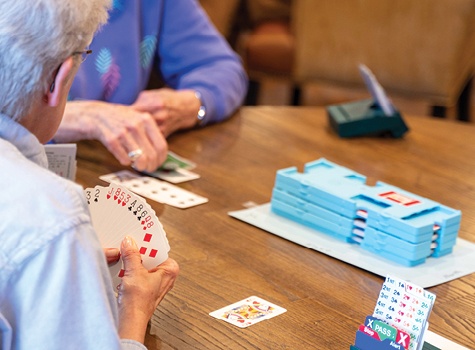
Knowing the many benefits for residents’ mental and physical health, we particularly put an emphasis on lifelong learning opportunities. From guest speakers to art classes to affinity groups like chess, bridge, and book clubs, Moravian Manor Communities provides residents with numerous ways to keep their minds active, all in a close-to-home location. Check our recent blogs on our Ukulele Group, Golf Group, or the woodshop!

MMC also has a strong partnership with the Warwick School District, offering intergenerational sharing, learning, and volunteering opportunities. One such program is our popular Socrates Café, where students from Warwick High School and residents meet for lunch and then discussion. It was an opportunity to interact and learn from each other, building relationships and community. Hopefully, this program can resume someday soon.

The Warwick School District also has offered adult education workshops, free for seniors, such as Microsoft Word and Excel, Knitting, Yoga, and Pound Rockout Workouts. Due to COVID, upcoming classes have not been announced.

Within walking distance of our two campuses, the Lititz Public Library also offers free community programs for adults, including book and hobby clubs as well as art demonstrations, films, Scrabble meet ups, and other lifelong learning programs.

Food for thought

Whether you are interested in learning about a new subject or acquiring a new skill, there are near-countless ways that lifelong learning benefits seniors. So why not challenge yourself and try something new? It’s a lifestyle choice that’s good for your mind, which in turn is good for your health!