COVID-19 Frequently Asked Questions for Residential Living
Moravian Manor Communities continues to monitor developments regarding the Coronavirus (COVID-19). As we have stated previously, this is a fluid situation, with new information coming daily. We continue to adapt to the guidance and requirements provided to us. At this time, there is one known cases of COVID-19 present at Moravian Manor Communities, a staff person. We have been very fortunate – and very cautious and deliberate in our measures to keep our residents safe and healthy. And, you have been very vigilant in adhering to all guidelines and restrictions. As we move into the Green Phase, our intent to proceed cautiously and safely will continue. Some restrictions will ease, while others will remain in place. Now more than ever, we ask that everyone continue to be vigilant with infection control practices to help stop the spread and protect each other. When spending time with family and friends, please ask them to wear masks, to distance, and to wash hands, as well. Many of us had hoped that, like the seasonal flu, the number of cases would go down as the temperatures went up. This does not appear to be how this virus operates. The truth is, we don’t know. What does seem to be the reality is that COVID-19 is not going away anytime soon, so we must learn how to live among it – while protecting ourselves and others from it.
Transition to the Green Phase will take place on Monday, June 29, 2020
Should I keep a journal of all contacts going forward?
YES! ALL RESIDENTS should be mindful of and record all visits, indoor and outdoor. It is basically a record of who you were in contact with – and wear you may have travelled to.
What should I do if I think I may have been exposed to or contracted the Coronavirus?
CALL YOUR PRIMARY PHYSICIAN IMMEDIATELY then notify Jennifer Shutt at 717-625-6106.
What areas of Moravian Manor Communities’ campuses will remain closed?
The following common space areas WILL REMAIN closed to all residents. This includes:
- Steinman Hall
- Zinzendorf Room
- Saal
- Library
- Gallery Café
- Baer Center Outpatient Rehabilitation and Exercise Room
- Hair Salons
What areas of Moravian Manor Communities’ campuses will open?
The following common space areas WILL OPEN to all residents. While visiting these areas, all must remain socially distanced and wear a mask. Residents may NOT play card games in these areas Residential Living COVID-19 Frequently Asked Questions
until further notice. ALL resident driven gatherings in these areas must be reserved through Jennifer Shutt. Spontaneous gathering without reservations are not permitted. To arrange a gathering in an open area, please contact Jennifer Shutt at 717-625-6106 or Marcie Berhaupt at 717-625-6000. Open areas available for reservation includes:
- The Gathering Place
- The Corner Pocket
- The Hall of Fame
- The Fireside Lounge
- The Roof Top Terrace
- Smart Fit Studio
- Bocce Ball Court & Shuffle Board Court
How do reservations for the Smart Fit Studio work?
Reservations are necessary to use the Smart Fit Studio. The studio will be restricted to two persons at a time. Reservations are available in one hour increments. All are responsible for sanitization prior to and after use of any equipment. Additional equipment has been purchased. This equipment includes Bosu Balls, Stretch Bands, and Yoga Mats.
Is the Garden Court Dining Room open for dining?
At this time, inside dining will be available for Garden Court Residents only. You must make a reservation and have the opportunity to select from a 4:30 p.m. or 5:30 p.m. seating. When making a reservation, indicate time and names of all residents in your party. There is a maximum of four at each table. Please be prompt for your reservation and courteous of time for reservations that follow yours. Masks must be worn when entering the dining room and remain on until after your order has been placed. Your mask must be worn to and from the restroom and when exiting the dining room. No Mask – No Service. A partition will be placed after the restrooms. You may NOT travel further than the partition.
In addition, it is important to note you will only have the option of ordering from the “Specials Menu.” Until further notice, the Ala Carte Menu will not be available.
A Hostess will assist you to your seat, control congestion, and monitor social distancing. The following protocols will be in place:
- Garden Court Dining Room will be restricted to a maximum of 30 diners at each seating.
- Disposable paper menus will be utilized.
- Salt and Pepper Shakers will not be on the table, but served in individual packets. Fresh pepper is available on request, however pepper grinders will be used by Dining Staff.
- All condiments will be served upon request.
- Bread will be served upon request.
- Tables will not be cleared until the conclusion of your meal, for safety and sanitary reasons.
In addition, all residents may utilize the Garden Court Dining Room evening takeout meal service Monday through Friday. To place your order, call 717-625-7616 by 3:00 p.m. and note the time you will pick-up your meal. Garden Court Residents can pick-up takeout meals at the Garden Court Dining Room Lobby. All others may pick-up at the Veranda entrance to the restaurant.
When will Garden Court Dining Room be open for all residents?
Plans are to open Garden Court Dining Room to all residents on July 13. Details will follow. Until that time, we invite all residents to take advantage of take out service from Garden Court Dining Room, or enjoy dining at the Owl’s Nest Restaurant.
Is the Owl’s Nest Restaurant open for dining?
At this time, inside and outside dining will be available at the Owl’s Nest for Lunch and Dinner, Monday through Saturday. You must make a reservation to dine in the evening and have the opportunity to select from a 4:00 p.m., 5:30 p.m., or 7:00 p.m. seating. It is NOT necessary to make a reservation for Lunch. When making a reservation, indicate time and names of all residents in your party. There is a maximum of four at each table. Please be prompt for your reservation and courteous of time for reservations that follow yours. Masks must be worn when entering the dining room and remain on until after your order has been placed. Your mask must be worn to and from the restroom and when exiting the dining room. No Mask – No Service.
In addition, Breakfast will be available for inside or outside dining on Wednesday and Thursday, Until July 6, at which time it will be available Monday through Saturday. It is NOT necessary to make a reservation for Breakfast.
A Hostess will assist you to your seat, control congestion, and monitor social distancing. The following protocols will be in place:
- Inside dining at the Owl’s Nest will be restricted to a maximum of 30 diners at a time.
- Disposable paper menus will be utilized.
- Alcohol sales will be available, however there is NO seating at the bar.
- Salt and Pepper Shakers will not be on the table, but served in individual packets. Fresh pepper is available on request, however pepper grinders will be used by Dining Staff.
- All condiments will be served upon request.
- Tables will not be cleared until the conclusion of your meal, for safety and sanitary reasons.
In addition, all residents may utilize the Owl’s Nest Restaurant for lunch or evening take out meal service Monday through Saturday. To place your order, call the Owl’s Nest at 717-626-3559 any Residential Living COVID-19 Frequently Asked Questions
time after 11:00 a.m. and note the time you will pick-up your meal. Pick-up will be curb side, at the W. 6th Street entrance to the restaurant. Breakfast take out is available on Wednesday and Thursday. On July 6, breakfast take-out will be available Monday through Saturday.
Will take out service continue?
YES! All Moravian Manor Communities’ residents may utilize the Café for take-out lunch service, throughout the entire week. All meals must be ordered before 11:00 a.m., and available for pick up AT THE VERANDA ENTRANCE TO GARDEN COURT between 11:30 a.m. and 1:00 p.m. Please call the Gallery Café at 717-625-6886 to place your order.
In addition, all Moravian Manor Communities’ Residential Living residents may utilize the Garden Court Dining Room for take-out evening meal service Monday through Friday. All meals must be
ordered before 3:00 p.m. Garden Court Residents may pick up AT THE GARDEN COURT DINING LOBBY between 4:00 and 5:00 p.m. All other residents may pick-up AT THE VERANDA ENTRANCE TO GARDEN COURT between 5:00 and 5:45 p.m. Please call the Garden Court Dining Room at 717-625-7616 to place your order.
As well, all residents may utilize the Owl’s Nest Restaurant for lunch or evening take out meal service Monday through Saturday. To place your order, call the Owl’s Nest at 717-626-3559 any time after 11:00 a.m. and note the time you will pick-up your meal. Pick-up will be curb side, at the W. 6th Street entrance to the restaurant. Breakfast take out is available on Wednesday and Thursday. On July 6, breakfast take-out will be available Monday through Saturday.
Is delivery service available for meals?
No, we will be discontinuing delivery service at this time.
Are residents who live in Garden Court Apartments, Manor Greene Apartments, Moravian Avenue Cottages, Hendricks Place Townhomes, Warwick Woodlands Carriage Homes, and Woods Apartments able to receive visitors?
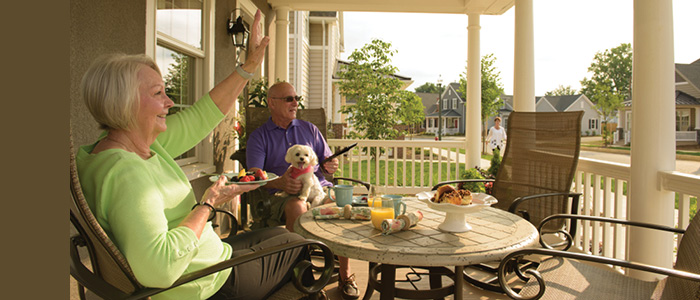
Yes. As long as you and your visitor are healthy it is permissible to have visitors. However, to help slow the spread of COVID-19, you should wear a mask, practice ‘social distancing’, maintaining a distance of 6 feet from other people. This reduces the chance of contact with those knowingly or unknowingly carrying the infection. And, practice good hand hygiene. Please remember, even though visitation is permitted, this does not negate the practice of social distancing, wearing a mask and good hand hygiene. In addition, we ask that you use good judgement and engage visitation with family and friends who are in good health condition. Please do not offer “shared” plates (for example, cheese trays, bowls of chips, pretzels, etc.) If serving food, all guests should receive a Residential Living COVID-19 Frequently Asked Questions
“plated” meal. Avoid serving items that guest’s share, even with a utensil to serve (tongs, spoons, etc.). It is important to be mindful that until a vaccine is developed and widely disseminated, COVID-19 will continue to be a risk to the residents of Moravian Manor Communities.
Your personal risk depends on your age and health, the prevalence of the virus in your area and the precautions you take during any of these activities.
If we are able to receive visitors, does this include outside housekeeping services?
Yes. Outside housekeeping services may resume on July 29. All outside housekeepers must check in either at the Receptionist Desk at 300 W. Lemon St., or the Concierge Desk in the Woods Apartment Building at 600 W. Sixth St. PRIOR to EACH service visit. They will be asked to complete a COVID-19 screening questionnaire and have their temperature taken. ALL OUTSIDE HOUSEKEEPERS MUST WEAR A MASK AT ALL TIMES! In addition, if you remain in your home during the service, you are required to wear a mask. Following the service, your outside housekeeper must return to the location where their pre-screening occurred to have an exit temperature. Anyone who violates these procedures will not be allowed to return.
If I have an underlying chronic medical condition that puts me at a greater risk of contracting the Coronavirus, what provisions should I use when receiving visits and visiting others?
Residents with an underlying chronic medical condition should refrain from hosting visitors and from visiting others.
When will large group activities resume?
All organized large group programs will continue using ZOOM until further notice. Small group gatherings inside and outside for up to 10 in attendance can be planned through Jennifer. This includes and is not limited to “Pins and Needles,” Bible Studies, Woodworking and Pool Groups. To discuss and arrange a small group gathering and to reserve a location, please contact Jennifer Shutt at 717-625-6106. Attendance restrictions will be communicated and must be followed. In addition, all participants must be socially distanced, wear masks, and practice good hand hygiene throughout the entire activity. Until further notice, playing cards or bridge is not permitted.
Please contact Jennifer with any questions or concerns. She will direct you to the appropriate person for an accurate response, if she is not certain.