
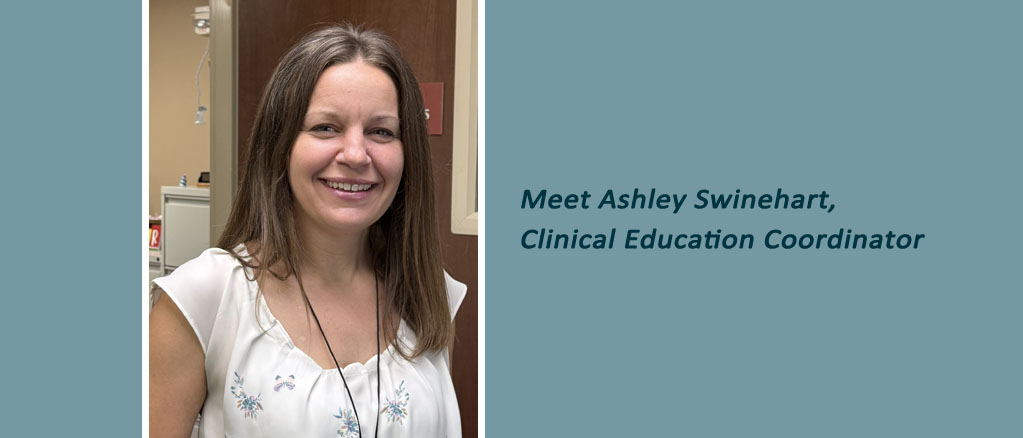
Meet Ashley Swinehart, MMC’s Clinical Education Coordinator
My journey with Moravian Manor Communities began in 2012 as a newly graduated nurse. I spent my early years on the floor, primarily serving as a charge nurse on the Herrnhut Community, until I transitioned into a nursing administrative role / MDS assistant in Fall 2017. When Covid-19 reshaped healthcare in early 2020, everything shifted. It quickly became clear that additional support in infection prevention was essential. I stepped away from the MDS office to assist our Infection Preventionist, who at the time was balancing that role alongside nursing education.
As Covid became more manageable, I gradually stepped back from infection prevention and began focusing primarily on education, with my main audience being our skilled nursing staff. In May of 2021, I accepted the full-time position of Clinical Education Coordinator.
Lifelong Callings
Even as a child, caregiving always felt very natural to me. I was the little girl who brought home every injured bird, bunny, or stray cat from the neighborhood, determined to nurse it back to health. One of my favorite childhood pastimes was “playing school,” often enlisting my younger brother as my one and only student. I also shared a special relationship with my paternal grandparents, whose influence deepened my comfort with and desire to serve older adults through time spent volunteering in our church congregation and visiting shut-ins, many of whom lived in long-term care facilities. Looking back, it feels fitting that I have found myself in a role that blends these lifelong callings, even though it was not the path I originally envisioned when I began my nursing career.
Skilled Nursing Team Education at MMC
For 2026, my goal is to continue prioritizing education for our skilled nursing staff across a wide variety of topics. Each year, we select training courses designed to meet Department of Health regulations, but additional topics often emerge through ongoing evaluation of our staff’s needs, resident care priorities, or areas where specific procedural skills could be strengthened.
Our training takes many forms. Each year, we host a weeklong nursing competency, where staff complete and are evaluated on a set of essential skills. In early spring, I run N95 clinics to review respiratory protection and proper mask use. Monthly, I lead New Hire orientation, providing hands-on classroom training where nursing policies, procedures, and essential skills are reviewed and evaluated. Throughout the year, we conduct safety drills—covering fire, elopement, and severe weather scenarios—giving staff the opportunity to practice and prepare for real-life events.
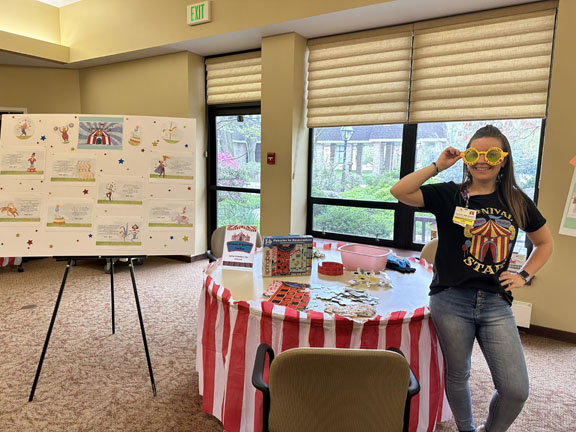
Ashley developed a carnival theme for Competency Training for staff to make it both educational and fun for attendees!
helAdditional education includes Bloodborne pathogens and exposure through a combination of video and live discussion, as well as CPR classes that cover CPR, AED use, and the Heimlich maneuver, all using feedback mannequins and hands-on demonstrations. At times, we use a “train the trainer” approach, where competent nursing staff train and evaluate their peers on topics such as bladder scans, tracheostomy care, needle devices, and medication administration. Our educational methods are diverse, including videos, presentations, online courses, escape rooms, and guest speakers.
To maintain ongoing engagement, we hold unit check-ins Monday through Friday and host monthly meetings to connect with frontline nursing staff, fostering a culture of support, positivity, and continuous growth. We often highlight communication, teamwork, a respectful workplace and collaboration.
In some cases, education is delivered by external providers, such as IV certification courses or Wound Care Management training. Recently, we partnered with Forge Works Consulting with the goal of providing direct support and education to staff caring for residents with dementia. This partnership also helps us refine our approach, language, and overall care strategies to better meet the needs of these residents.
Read more about an immersive dementia experience workshop held for the nursing team.
Approaching Nursing with Professionalism & An Eagerness to Adapt and Learn
Nursing is an art – one that blends a strong foundation of knowledge with the ability to think critically, solve problems, and offer compassionate care to those who are hurting. It requires professionalism, emotional resilience, and a commitment to exceptional service, even in the most challenging moments.
Nursing is also ever-evolving. Advances in modern medicine, pharmaceuticals, clinical procedural, and our understanding of disease processes are constant. Because of this, healthcare professionals must remain knowledgeable, adaptable, and eager to learn. Continuous education and growth not only allows us to uphold best practices, but also strengthens our ability to support healing, manage complex conditions, and ensures the highest standards of resident safety and quality of care.
I am proud to serve MMC’s skilled nursing staff, the residents and their families as the Education Coordinator. My primary goal is to support all members of our nursing care team—CNA, LPN, and RN alike—by providing the tools, guidance, and encouragement they need to grow in their roles and build confidence as frontline caregivers. I find happiness in witnessing the personal and professional growth of a fellow nurse and seeing their dedication and passion reflected in the way they care for and support our residents. This position allows me to combine my enthusiasm for hands-on nursing alongside my peers with a strong commitment to serving in a supportive role. Many days, I leave work feeling fulfilled, hopeful that I was able to make a positive impact on both the staff and residents I serve.